
Traffic Warrants in Middlesex County
A traffic warrant in Middlesex County is a court order, not a line on a driving record. It is not the registry's doing. The warrant follows a failure to answer a criminal citation or a failure to appear after the traffic process began, and it belongs to the District Court division named on that citation. The clerk of that division confirms whether one is open. Civil citations take a different road. They resolve through payment or an appeal to the Registry of Motor Vehicles, and both routes can cost a driver a license. The two tracks also run on separate clocks, which is why the document in hand decides nearly everything.
Middlesex Traffic Warrants Start With a Citation
A civil infraction gets 20 days in Massachusetts for payment or an appeal. Miss the window and late or release fees can follow. The Registry of Motor Vehicles then mails a default notice. If the amount still goes unpaid within 30 days, a license or the right to operate can be suspended. Those consequences are administrative. They come from the registry, not from a judge, and they can land even when no court case exists in Middlesex County. A criminal citation behaves differently. It puts a court date on the calendar from the start. Note: A suspended license and an open Middlesex County court warrant are two problems with two fixes.
How to Check a Middlesex Traffic Warrant
First figure out which system holds the Middlesex County ticket. The channels after that are few, and the order matters.
- Read the citation and decide whether it is civil or criminal. The court named on a criminal citation is the office that matters.
- Search the named District Court division by case or citation number through a Middlesex County warrant search.
- Call the Clerk's Office at that division and ask whether a default warrant is open and what the court wants next.
- For a civil citation, follow the registry and Citation Processing Center instructions and ask what the default notice requires.
- Ask a police records unit or the sheriff's office only for the documents each one actually keeps.
No single office in Middlesex County sees the whole picture. A District Court division sees its own case, the registry sees the license, and the sheriff sees what has been entered for enforcement.
Middlesex Traffic Warrants: Civil or Criminal
Middlesex County's track sets the office, deadline, and consequence.
| Point | Civil Citation | Criminal Citation |
|---|---|---|
| Where it is answered | The citation payment system and the registry | The District Court division named on the ticket |
| Deadline | Payment or appeal within 20 days | The court date printed on the citation |
| What nonpayment brings | Fees, a default notice, and a possible suspension | Contempt process, or a warrant after a missed appearance |
| Who controls the outcome | The registry and the processing center | The judge or clerk-magistrate |
Start with the state's traffic ticket hearing guidance. It explains what a Middlesex County clerk-magistrate hearing involves.
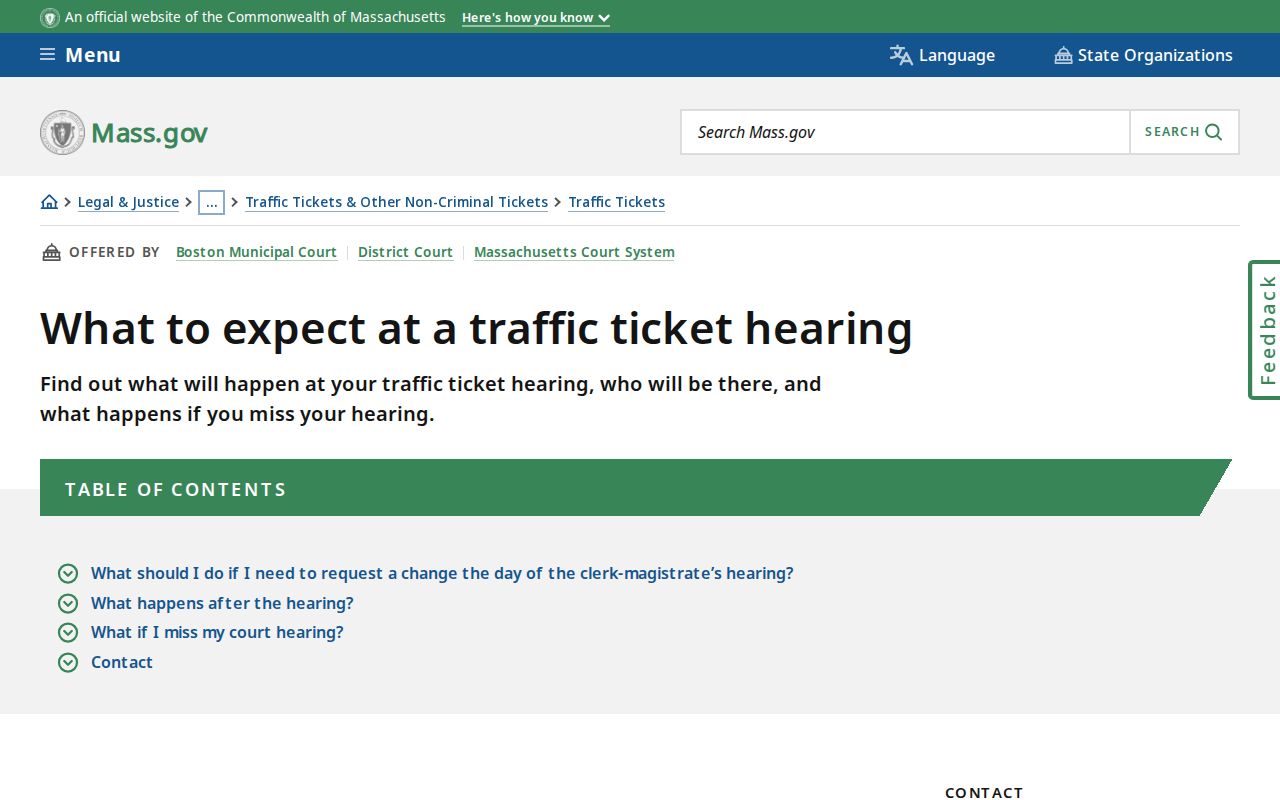
A hearing can reset a civil default in Middlesex County. That reset is what keeps the matter off the warrant track.
What a Middlesex Traffic Warrant Shows
Traffic records carry fewer fields than criminal warrants. The citation number is the one worth writing down first in Middlesex County.
| Citation number | The ticket identifier, shown here as T-YYYY-#######. |
|---|---|
| Court division | The District Court division hearing the matter. |
| Offense date | The date of the alleged violation, which is separate from the default date. |
| Charge | The civil infraction or the criminal offense named on the citation. |
| Default date | When the missed answer or appearance was recorded. |
| Amount | The fine, fee, or assessment tied to the citation. |
| Status | Open, paid, defaulted, recalled, or scheduled for a hearing. |
Note: The offense date and the default date are different events, and a Middlesex County clerk will ask for whichever one the file uses.
Somerville Citations and Middlesex Court Warrants
Somerville's traffic safety policy draws the line plainly. Civil citations get paid or appealed through the Citation Processing Center, while criminal citations get signed and mailed to Somerville District Court on the Fellsway. Two drivers, two tickets, two systems, all in one day. Cambridge makes the same handoff in its own traffic enforcement policy, which covers citation practice and the show-cause timing that follows a stop. Those Middlesex County policies are worth reading. They show the split in plain language.
Paying or Lifting a Middlesex Traffic Warrant
Money and court action are not the same thing. Paying a civil citation at the registry or the processing center clears the balance. It may even end a suspension. It does not withdraw a warrant a judge signed. The issuing Middlesex County division has to act. That may mean paying the amount in full, asking for a payment plan, requesting a new hearing date, or asking a magistrate or judge to remove the default. Afterward, ask for the docket entry that records the change.
Caution: A receipt from a payment system is not a recall order. Confirm the court's action in writing before treating the matter as closed.
Middlesex Traffic Warrants and Citation Payments
Civil citation payments run through the state's processing center. The official payment instructions allow online and phone payment. One phone line serves the 339, 617, 781, and 857 exchanges. A separate number takes callers outside those areas. The mailing address accepts a check or money order, never cash. Have the citation number, the offense date, and the amount ready, since the system asks for all three. No Middlesex County warrant or docket changes there.
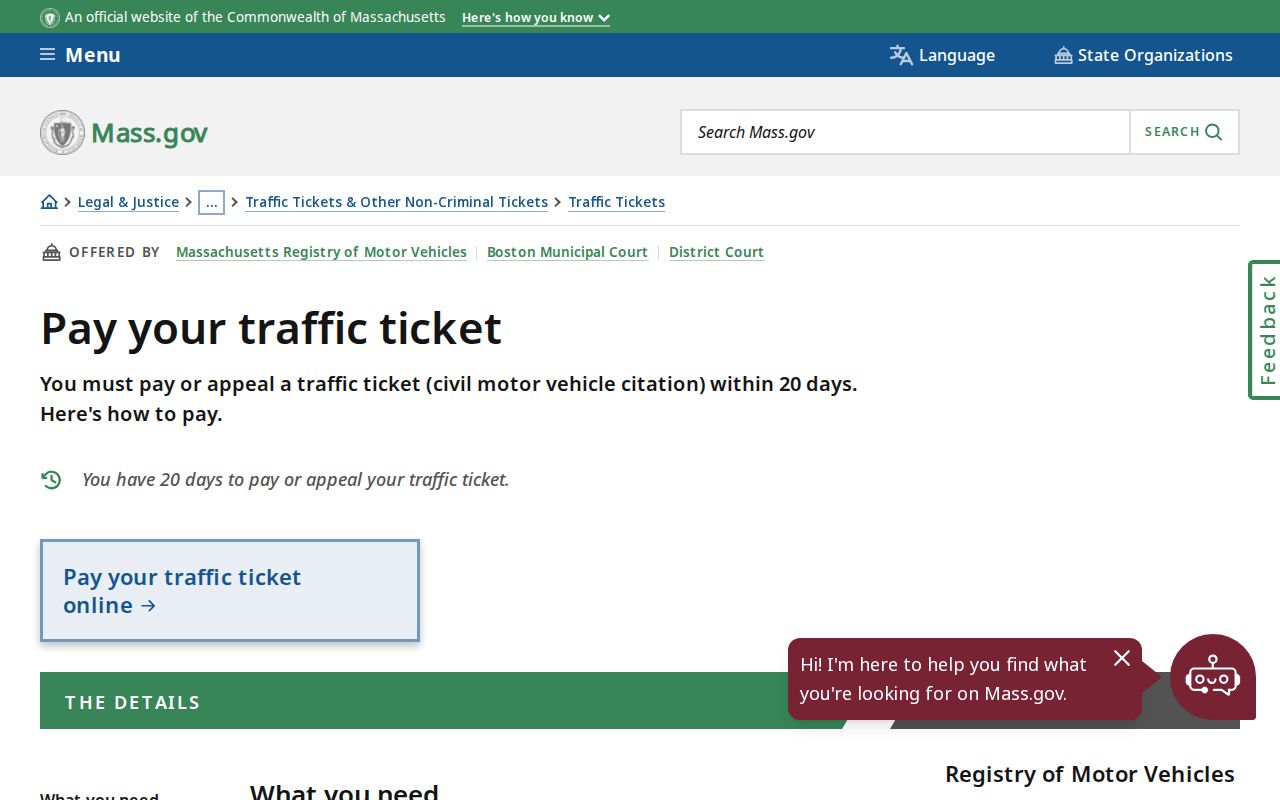
The registry handles the license, the court the warrant, in Middlesex County. The two updates travel separately.
Middlesex Traffic Warrants, FTA, and License Holds
In Middlesex County, a failure to appear and a license hold can come from the same ticket. Different offices handle each one.
| Point | Court Warrant | License Action |
|---|---|---|
| Who issues it | A judge or clerk-magistrate | The Registry of Motor Vehicles |
| What triggers it | A missed appearance on a summons or a criminal citation | An unpaid default after the notice period |
| What follows | An officer may take the person into custody | The license or right to operate can be suspended |
| How it ends | A recall, a payment the court accepts, or an appearance | Payment, or the registry's own reinstatement steps |
The state's Rule VII on civil motor vehicle infractions explains the stakes in Middlesex County. Failure to pay or appear can bring contempt process. A missed summons can produce an arrest warrant.
Parking Tickets Are Not Middlesex Court Warrants
A parking ticket in Middlesex County is a city matter, not a court one. Cambridge gives you 21 days to pay or dispute, by phone, by mail, or in person at the municipal building. Bring the ticket and your plate number to dispute. Let five tickets slide and the car becomes boot-eligible. Somerville runs its noncriminal municipal tickets through the City Clerk instead. That separate payment system wants the ticket control number and the name on it, and appeals close after 21 days. Skip payment there and you may face a demand fee, a lien, or trouble with a certificate of good standing. Still, none of it is a criminal warrant, as the municipal court page explains. A Middlesex County traffic warrant comes from a court default, not a meter.
No Middlesex Traffic Warrant Portal Was Found
Middlesex County posts no countywide traffic warrant search. No single court portal covers traffic defaults across all twelve divisions either. Your citation and the court named on it point the way.
Key Rules:
Trial Court Rule VII: how a civil motor vehicle infraction becomes a default and when a warrant can issue.
G.L. c. 276, Section 23A: the warrant system is open to law enforcement and the registry, not to the public.
Note: In Middlesex County, keep the original ticket, since a clerk needs the citation number and the offense date most.